In 2022, cureCADASIL and a team of world-renowned researchers were awarded a $1M grant for their collaboration to drive progress for the CADASIL Community as part of the Chan Zuckerberg Initiative's Patient-Partnered Collaborations for Rare Neurodegenerative Disease (CZI PPC) – a program that supports work by patient communities and scientists to accelerate research in the fight against rare diseases. We're happy to share that this partnership has successfully received an additional $1M in funding, to be split between research and patient engagement efforts, starting in 2025.
The CZI PPC award supports research centered on science that will close critical knowledge gaps and build a strong foundation for translational efforts, as well as engagement and communications activities to involve and inform the patient community.
Through this partnership, cureCADASIL will receive an additional $200K in funds to support our continued efforts to strengthen patient engagement, drive enhanced educational and communications activities, and support the research team in their mission to make breakthroughs that benefit the CADASIL community.
In 2023, we established a Community Advisory Group (CAG) to help guide our community engagement initiatives and provide us with feedback and insight on both research and patient advocacy. Last year, with integral input from the CAG, we launched a revamped website and logo, and updated our social media channels. CAG members participated in a Q&A panel moderated by Dr. Fanny Elahi at our Patient-Investigator Meeting on June 29 and presented the insightful results from the patient survey they co-created with Dr. Elahi and her team. The results provided the research team with helpful knowledge about the CADASIL community and will continue to guide their research going forward. Dr. Elahi and her lab are continuing to analyze the survey responses and are greatly appreciative of everyone who took the time to complete it. The CAG's input has been absolutely invaluable in ensuring that our community-geared efforts are reflective of what patients and their loved ones and caregivers want to see.
This year, we developed a printable handout for patients to download and keep on hand. This handout includes useful information for patients, caregivers, and care providers. The handout is available here.
Below is the progress made toward our funded milestones:
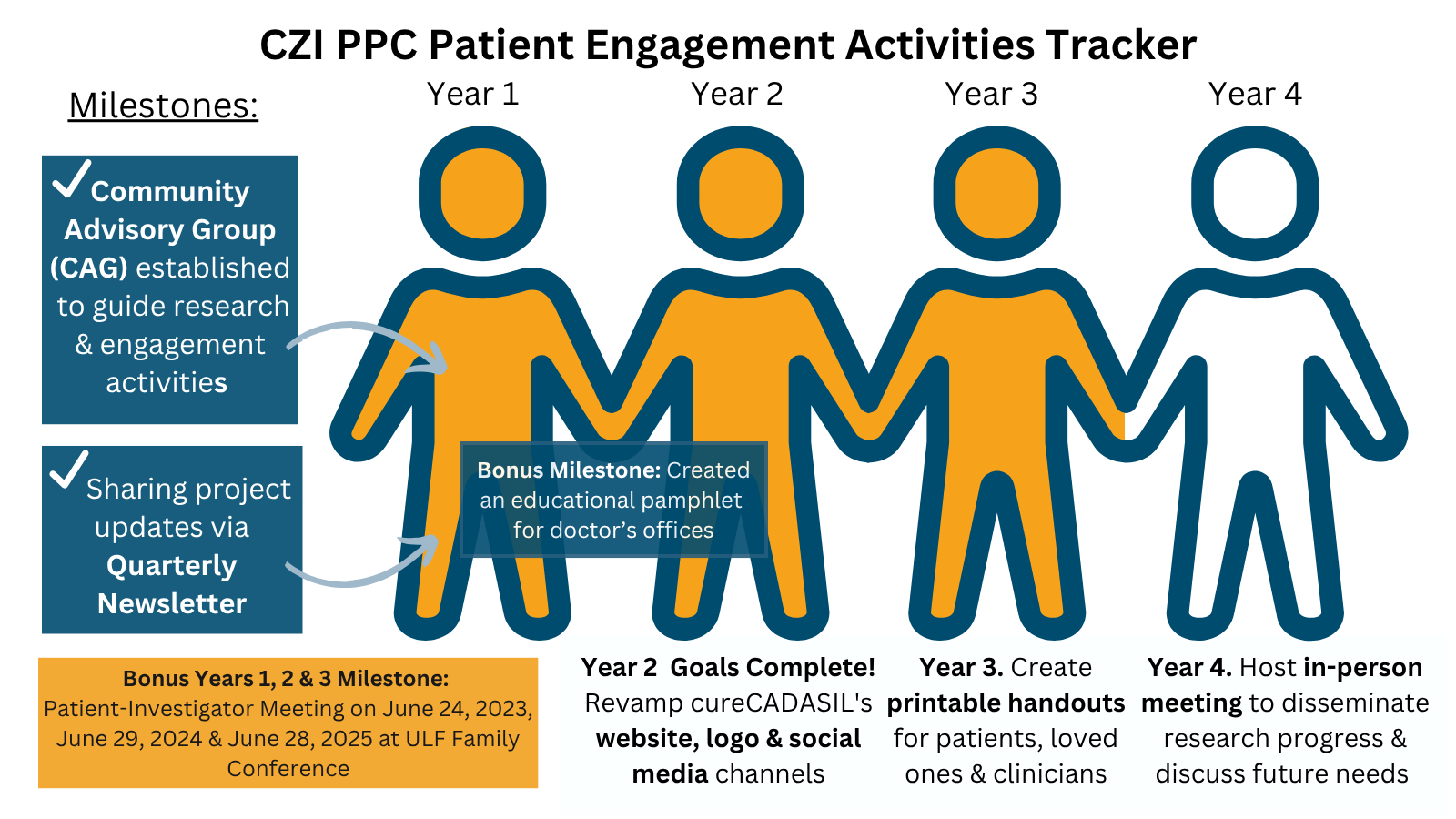
A major milestone of the CZI PPC grant is the establishment of a Community Advisory Group (CAG) — a dedicated group of individuals who have knowledge or experience in CADASIL and areas of neurodegenerative disease and stroke who will provide invaluable insights into patient and caregiver perspectives, needs, and aspirations. The CAG has played a vital role in guiding our team toward discovery and providing feedback to cureCADASIL on its patient engagement activities and associated materials. We extend our heartfelt gratitude to all our 2025 CAG members for their participation and thoughtful contributions.
Our CAG members Ki and June gave talks at this year's Patient-Investigator Meeting. They spoke about what it is like to be living with CADASIL and the symptoms that impact daily life and should be a focus of clinicians and treatments.
Recordings from the 2025 Patient-Investigator Meeting are available here
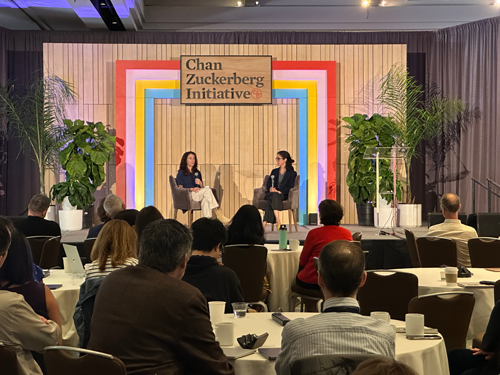
In 2024, CAG member Ki Coale and research team lead Dr. Fanny Elahi led an insightful discussion about the crucial role of patient participation in research with more than 200 researchers and patient advocates in attendance at the CZI Neuroscience 2024 Meeting. Their discussion was well-received by the research and patient communities alike and emphasized the importance of patient input and involvement in the research process and how cureCADASIL's CAG has been instrumental in guiding Dr. Elahi's work. Thank you to all our CAG members for all your hard work!
In addition to our collaborative efforts with patients, we have been working with other researchers and institutions to build a brain donation network. Because brain donations are a key resource for research like the work Dr. Elahi and her team are completing, we have been working diligently to facilitate the donation of brains to research teams across the country.
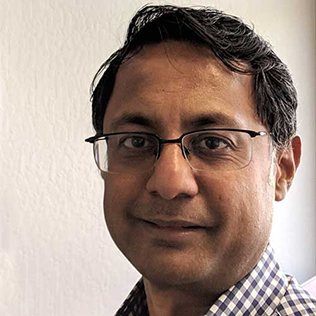 Debarag Banerjee, PhD
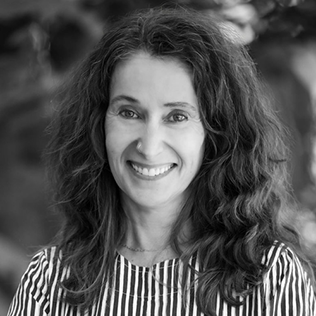 Ki Coale
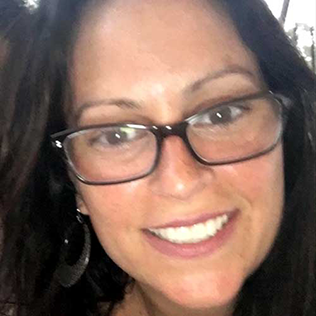 Andria Burroso
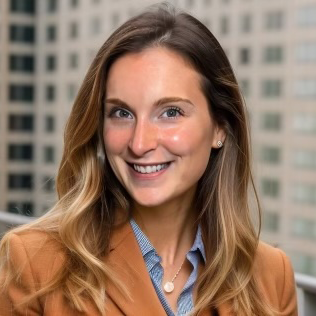 Courtney Deplaris
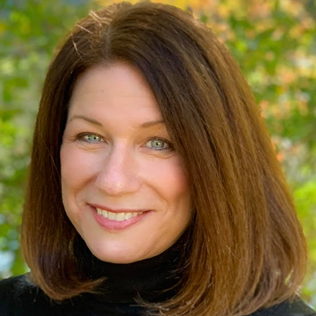 June Wallach
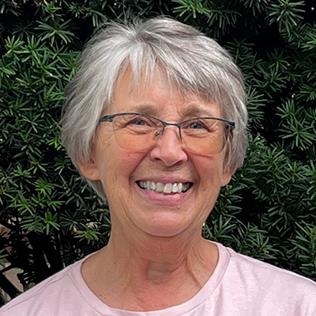 Carol Schroeder
The coordinating research PI, Fanny Elahi, MD, PhD, Associate Professor of Neurology, Neuroscience, and Pathology and Molecular and Cell-Based Medicine at the Icahn School of Medicine at Mount Sina and her team, received $800K in 2022 to conduct research for 2 years and has received an additional $800K to continue their research through 2026. Dr. Elahi is leading a multi-disciplinary team to build cellular models of CADASIL to reverse engineer the disease in order to discover new therapeutic targets.
Now in Year 3 (2025) of the grant, Dr. Elahi and her team are pleased to report significant progress: they have initiated in vitro drug screening to identify compounds with the greatest potential to treat CADASIL. The foundational work completed during Years 1 and 2 has enabled this next critical phase. In parallel, they are actively seeking the right partner(s) to initiate high-throughput screening—a powerful approach that will allow them to test large numbers of drugs efficiently and rapidly.
Beyond drug discovery, the team is also investigating immune system dysfunction in the brain that may contribute to CADASIL. This effort has been made possible by generous brain donations from patients and families, for which the Elahi Lab is deeply grateful. These invaluable gifts have allowed researchers to begin identifying immune signatures that could offer new insights into the disease.
In 2024, the team welcomed a new member to help accelerate progress on their 3D in vitro flow models and analysis of immune system involvement. They also embarked on an exciting new direction: the development of miBrain (multicellular integrated brain) models, in collaboration with the Blanchard Lab at Mount Sinai. Their first miBrain model was completed in the fall of 2024, marking a major milestone. They are now working on improvements.
The team is continuing to refine these models, building on Year 2's momentum. Their 3D flow models are approximately 70% complete, and they are well on their way (80% complete) in the analyses of the relationship between the immune system and blood vessels in CADASIL samples. This is a complex problem. The team expects that it will take at least two more years to reach reportable discoveries.
Dr. Elahi and her team enjoyed connecting with patients and community members at last year's Patient-Investigator Meeting and invite your to this year's meeting 2026 PIM. Connecting with patients is a main goal of the CZI project and a true highlight of the work the team is doing.
On the clinical research front, Dr. Elahi and Dr. Karen Orjuela (Equity Neuroscience) have partnered with teams in South America (Brazil, Argentina, and Colombia), to expand the breadth and depth of studies on CADASIL. In addition, Dr. Elahi is leading an international workgroup focused on ranking existing drugs and investigating which of these have the most promise for clinical trials in CADASIL.
The research team's first paper from this project is available publicly as a pre-reprint and is in peer review. Basic research is going forward and Dr. Elahi and her team are so grateful to everyone who has participated and donated to this work.
In other exciting work, Drs. Michael Wang and Fanny Elahi are continuing their collaboration on CADASIL research, with funding from the Department of Veterans Affairs. Their work will determine core proteins and biochemical pathways that drive the CADASIL disease process. The four-year project promises to unravel how hundreds of different mutations in NOTCH3 result in a single disease. This work builds upon Dr. Elahi's on-going CZI study and fundamental biochemical work from the Wang Lab.
Thank you for continuing to help us push the frontiers of knowledge in CADASIL. This collaborative effort would not be possible without your involvement, so thank you to everyone who plays a role in CADASIL research. Together, we are building the path toward clinical trials and treatments. We are looking forward to achieving our Year 3 (2025) goals!
Most important to this research and to progress toward treatments are the collaborations between everyone who is touched by CADASIL. New valuable collaborations have been formed through patient connections. CADASIL researchers, industry partners, advocates, and patients have been coming together to solve the questions we all have about CADASIL. This collaborative effort would not be possible without your involvement, so thank you to everyone who plays a role in CADASIL research. Together, we are building the path toward clinical trials and treatments.
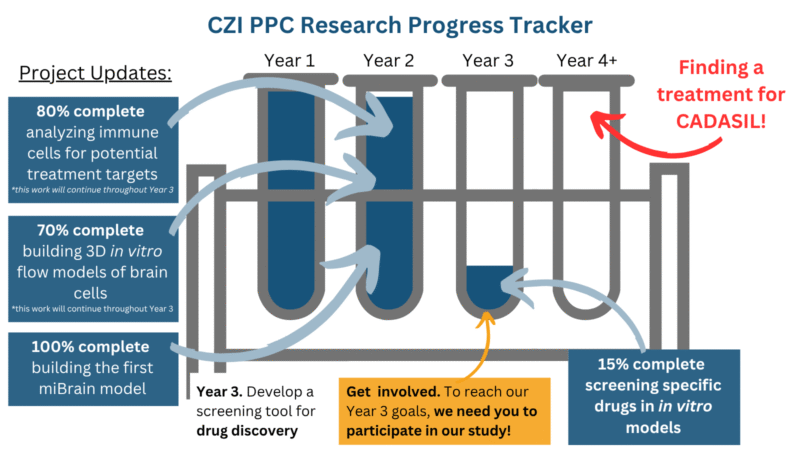
In the CZI PPC's unique funding program, CADASIL patients can participate in research at the bench rather than only in the clinic, making us partners in this truly translational work. Dr. Elahi and cureCADASIL need your help to complete their Year 3-4+ milestones. What we need: blood samples and other standard assessments (brief medical exam, brain imaging, and memory tests) from individuals living with CADASIL and from healthy volunteers (family members, friends). We deeply appreciate your consideration and thank everyone who has already volunteered!
Meet the Teams
cureCADASIL Team
 Bertram Kasiske
cureCADASIL President
Bertram Kasiske
cureCADASIL President
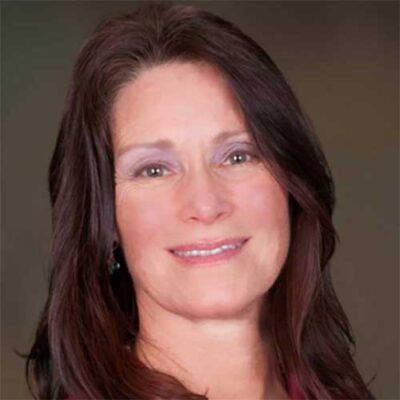 Jane Gunther
(Patient Organization PI)
Jane Gunther
(Patient Organization PI) 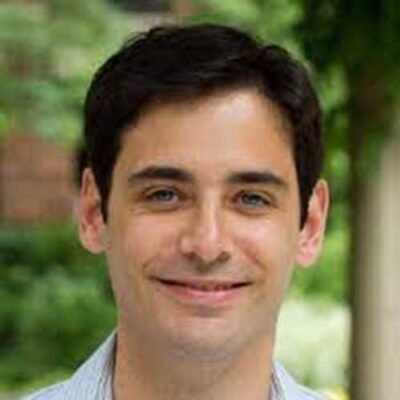 Pedro De Lencastre
cureCADASIL Secretary
Pedro De Lencastre
cureCADASIL Secretary
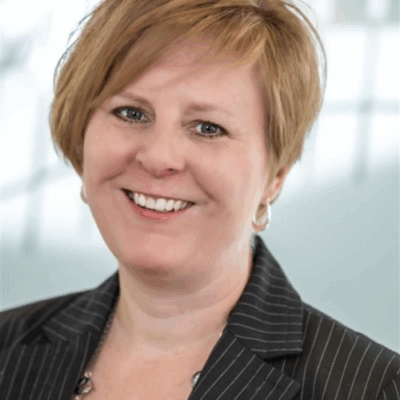 Cheryl Gibson
cureCADASIL Treasurer
Cheryl Gibson
cureCADASIL Treasurer
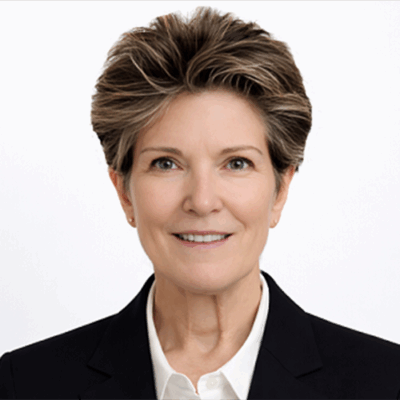 Kathy Siegel
cureCADASIL Trustee
Kathy Siegel
cureCADASIL Trustee
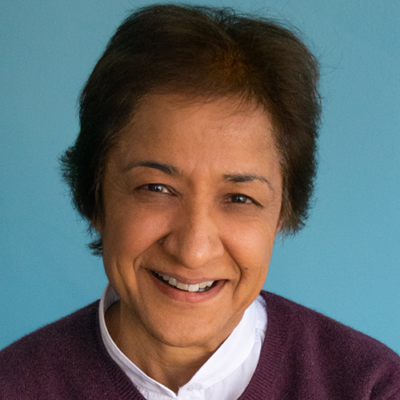 Vinita Bahl
cureCADASIL Trustee
Vinita Bahl
cureCADASIL Trustee
Research Team
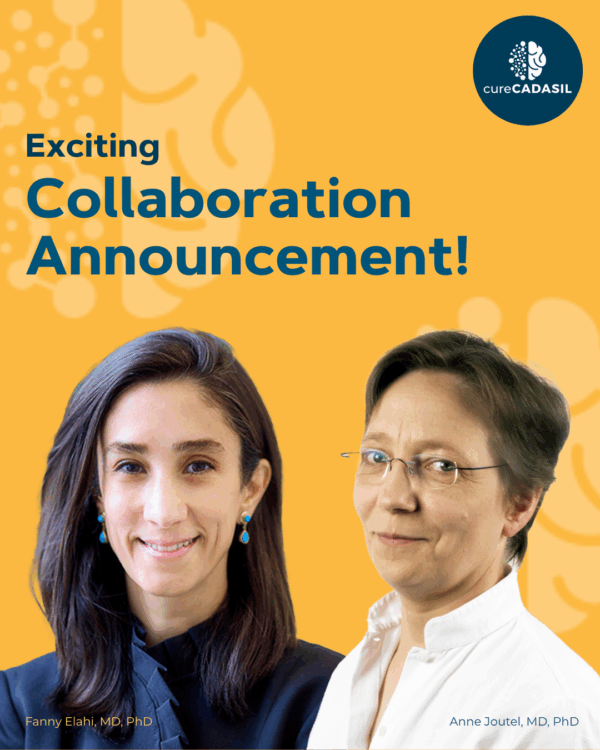
Dr. Fanny Elahi, Director of the VascBrain Study at the Icahn School of Medicine at Mount Sinai in New York, and Dr. Anne Joutel at INSERM in Paris announce a formal collaboration to advance research in CADASIL biomarker development and drug discovery. Their partnership will include the sharing of biospecimens and experimental model systems to accelerate translational progress.